Teleop
A library: WebXR motion input for your own robot code. You build the rest.
- Interfaces for xArm and ROS 2
- LeRobot teleoperator plugin
Teach Robot Arms by Demonstration.
One platform for the whole robot-learning workflow: hardware integration, data collection in VR, safety, dataset cleaning and sync, training, inference, and remote assistance when a policy fails.
Teleop Pro is the software between your robot arm and a robot-learning model. People show the arm a task, Teleop Pro turns that into training data, and the trained policy runs on the same arm, with a person able to take over at any moment.
Teaching a robot arm a task takes much more than a model. Teleop Pro covers all eight stages, from connecting the hardware to helping the policy when it fails.
Stage 8 feeds stage 2: every recovery is new training data, so the next model fails less.
Drivers for the arm, its cameras and the headset, and the services that tie them together on a PC beside the robot. No ROS 2 required.
An operator drives the arm in VR: squeeze to move, pull the trigger to grasp, let go to rest your hand.
Here an operator picks up cotton swabs one at a time. The arm follows the hand at 200–300 Hz with low latency, so small corrections land where you intend.
A stereo camera over the workspace sends one image to each eye. You judge how far the gripper is from an object the way you do with your own hands, which is what makes fine tasks easy to teleoperate.
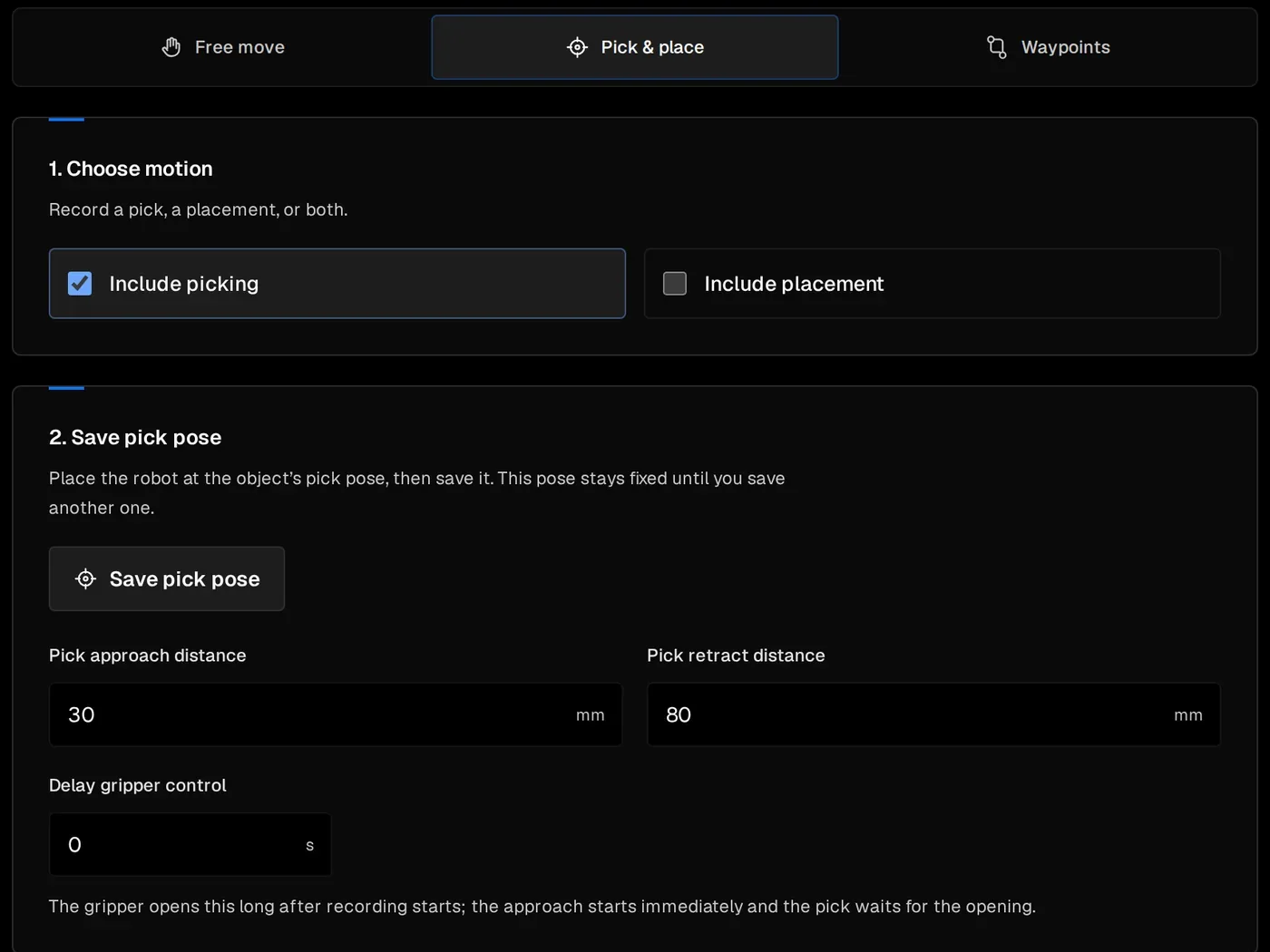
Drive every episode yourself, or let the recorder repeat a motion while you only move the objects.
One safety layer checks every target, whether it comes from a person, the recorder or a policy.
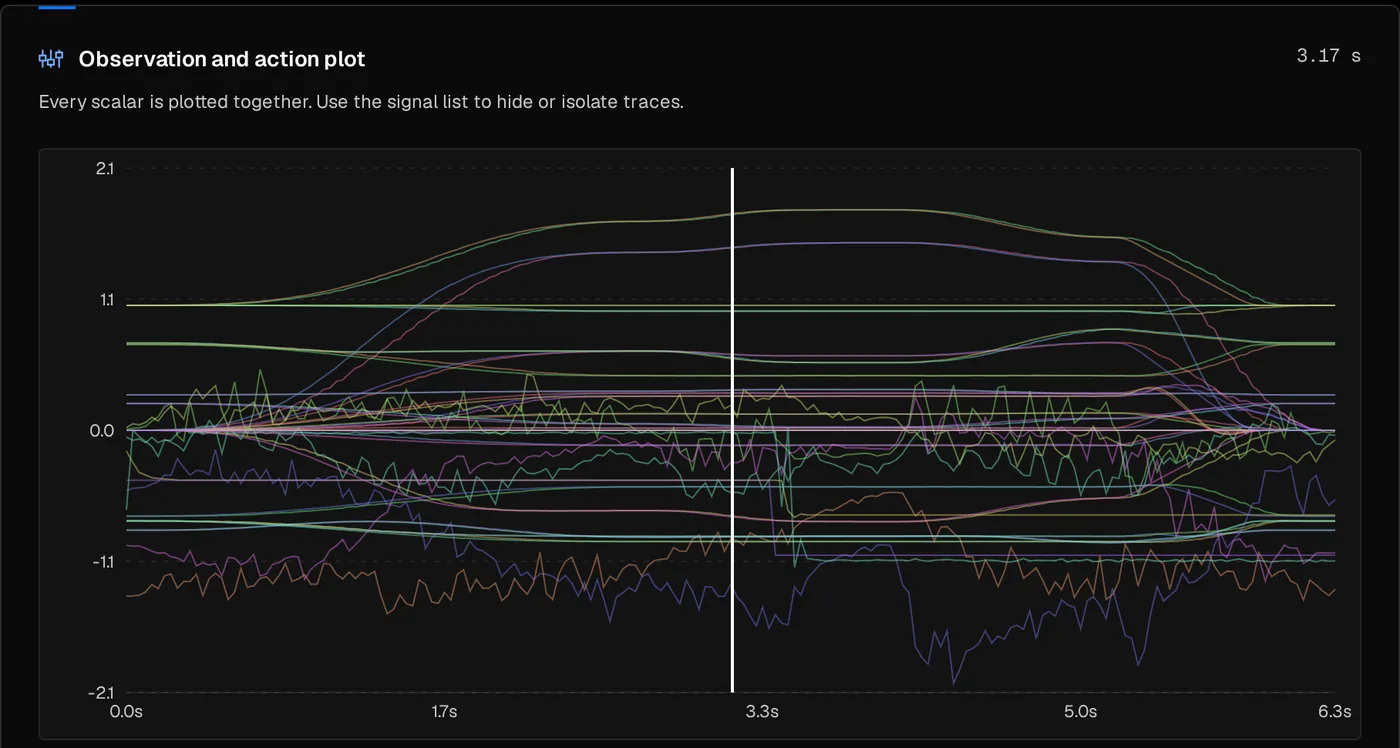
A bad demonstration teaches a bad habit. Replay every episode, see exactly what was recorded, fix the instruction, and delete the takes that went wrong.
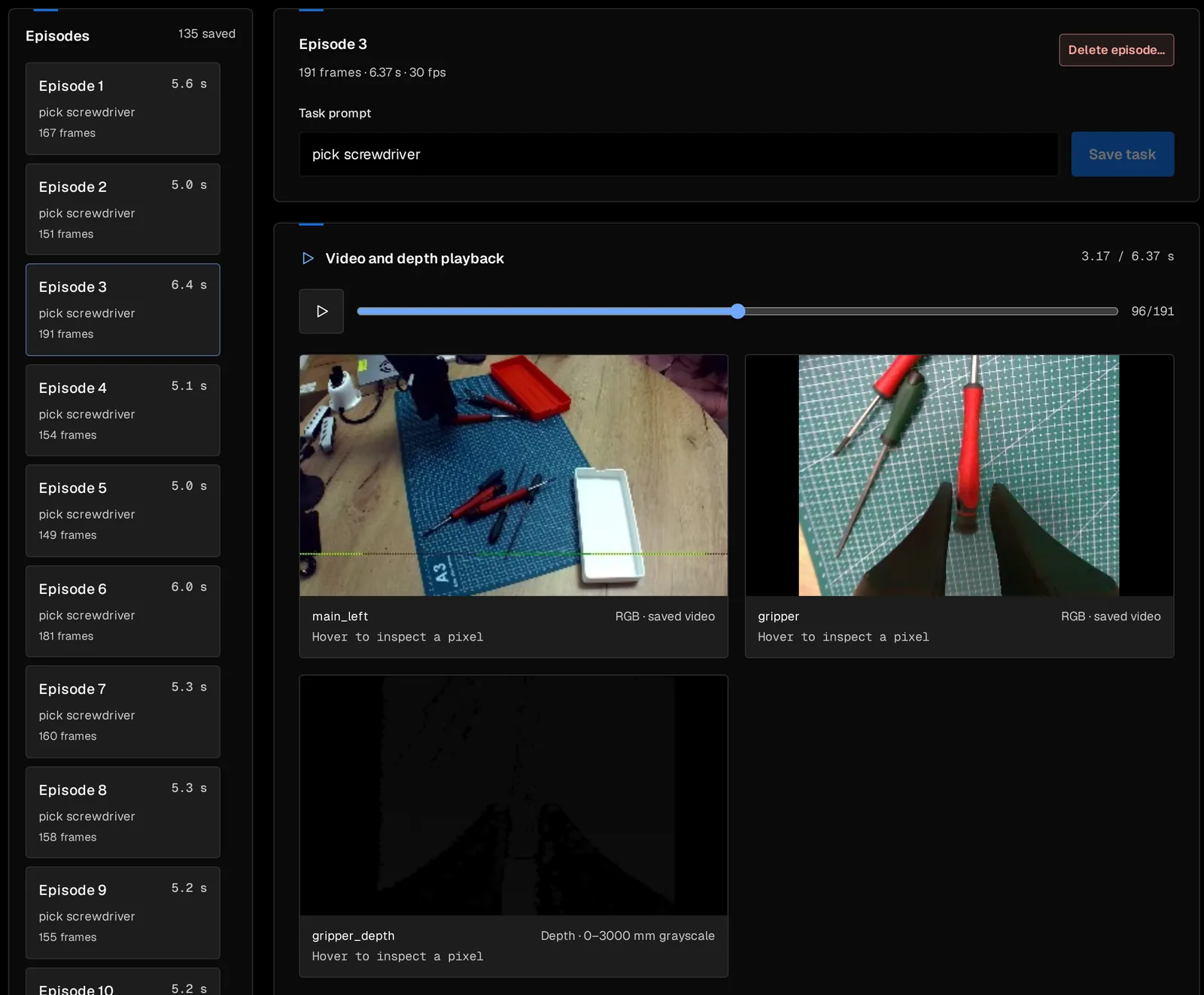
Task“pick screwdriver”
Episodes are saved on the robot PC. One press pushes a private copy to Hugging Face, and the machine that trains pulls the same dataset.
SpesVLA is our vision-language-action model: camera images and a sentence in, arm motion out. We train it on your episodes. The dataset is standard LeRobot, so your own training code works too.
95%LIBERO-Long success rate
On a standard long-horizon benchmark SpesVLA scores with the best open models at a fraction of their size.
Read the Research PreviewSpesVLA: internal simulation benchmark, final checkpoint of the latest run, 10 trials per task (100 in all); the papers use 50 per task. The best intermediate checkpoint reached 100/100; a 50-trial confirmation is pending. Others as published: OpenVLA-OFT (Kim et al. 2025), π0.5 (openpi), GR00T N1 (as reported by Wang et al. 2025), SmolVLA (Shukor et al. 2025).
The trained policy drives the arm through the same interfaces and the same safety layer the operator used. It watches the cameras and re-plans as the scene changes.
No policy is right every time. When it fails, squeeze the grip: the arm is yours mid-motion, from the lab or over the internet. Finish the task, and the fix becomes training data for the next model.
Teleop Pro grows out of Teleop, our open-source library. LeRobot's posts about it:
A library: WebXR motion input for your own robot code. You build the rest.
The whole workflow, set up on your hardware by our engineers.
Teleop Pro is partly funded by the Innovation Fund of the Republic of Serbia.

Tell us about your arm and the task; we will show you the whole workflow on it.
Talk to Our Engineers